




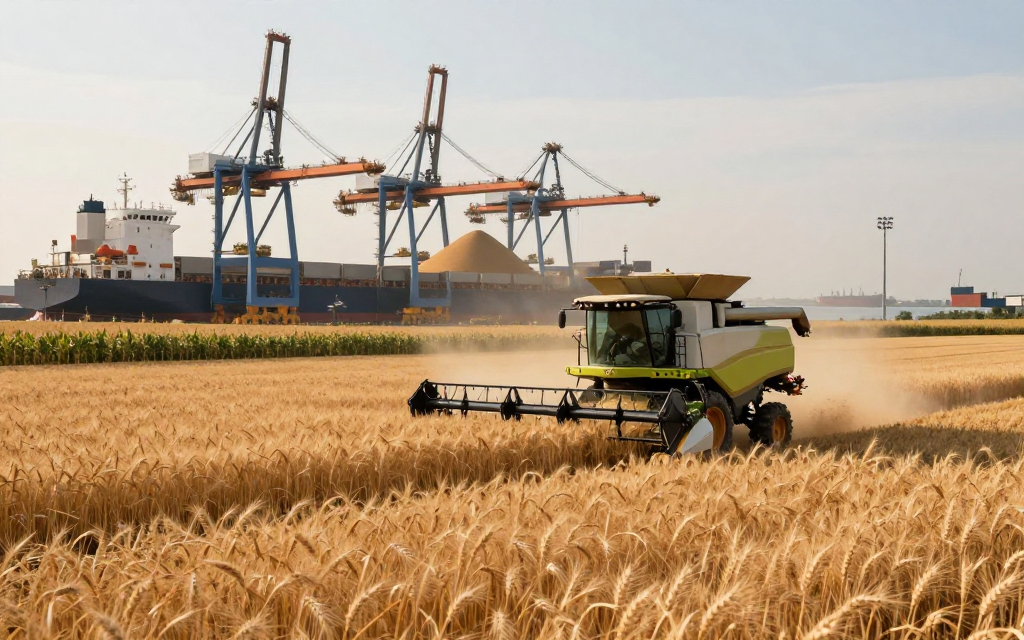
Grains start Tuesday with a mixed tone after Monday’s energy-driven weakness. Wheat and corn are slightly firmer, while soybeans open under pressure as traders shift focus from crude oil to fertilizer supply, Black Sea exports and evolving China demand dynamics.
The dominant new driver is tightening fertilizer availability. Moves by major exporters to restrict supply and early signals of reduced wheat planting in key regions are raising concerns over input costs and acreage decisions. This is broadly supportive for wheat longer term, as higher costs could limit production, but the effect is gradual rather than immediate.
At the same time, strong export flow from the Black Sea continues to cap wheat upside. Russian shipments have accelerated sharply, reinforcing the view that global supply remains competitive despite geopolitical risks. This creates a ceiling on rallies, even as underlying support from input costs and weather persists.
U.S. wheat fundamentals remain mixed. Crop conditions in parts of the Plains are weakening, and export shipments have been solid, providing near-term support. However, these bullish elements are being offset by ample global supply and aggressive export competition.
Corn is trading with a steadier bias. Export demand remains active, supported by recent sales and consistent inspection data, but the market is still reacting to the weaker energy complex. Lower crude prices reduce support for ethanol, keeping the upside limited despite firm demand.
South American corn supply continues to weigh on sentiment. Brazil’s second crop is nearly fully planted, pointing to a stable production outlook unless weather deteriorates. This keeps corn anchored, with traders needing a stronger demand or weather trigger to push prices higher.
Soybeans are under pressure at the open, driven by a key shift in trade dynamics. China’s move to ease import conditions for Brazilian soybeans reduces friction in shipments and strengthens Brazil’s position as the primary supplier. This is negative for U.S. soybeans, particularly during peak South American export season.
Brazil’s harvest progress remains a balancing factor. While harvest pace is still behind last year and logistics issues have slowed exports, improvements in trade flow conditions could accelerate shipments. That limits the supportive impact of earlier delays.
Weather remains broadly non-threatening for now. Conditions in the U.S. and South America are mixed but not extreme enough to trigger a strong market reaction. This leaves supply, demand and policy factors as the main drivers for today’s trade.
Wheat: May ’26 CBOT wheat is slightly higher early after closing Monday at $5.87 3/4, down 7 1/2 cents. Support comes from tighter fertilizer supply and weaker U.S. crop conditions, while strong Black Sea exports continue to cap gains.
Corn: May ’26 corn is modestly higher early after closing Monday at $4.59 1/2, down 6 cents. Export demand and recent sales are supportive, but weaker crude oil and steady South American supply keep the tone cautious.
Soybeans: May ’26 soybeans are lower early after closing Monday at $11.63 1/2, up 2 1/4 cents. Pressure comes from improved China-Brazil trade flow and softer energy markets, while strong export pace and processing margins help limit downside.