



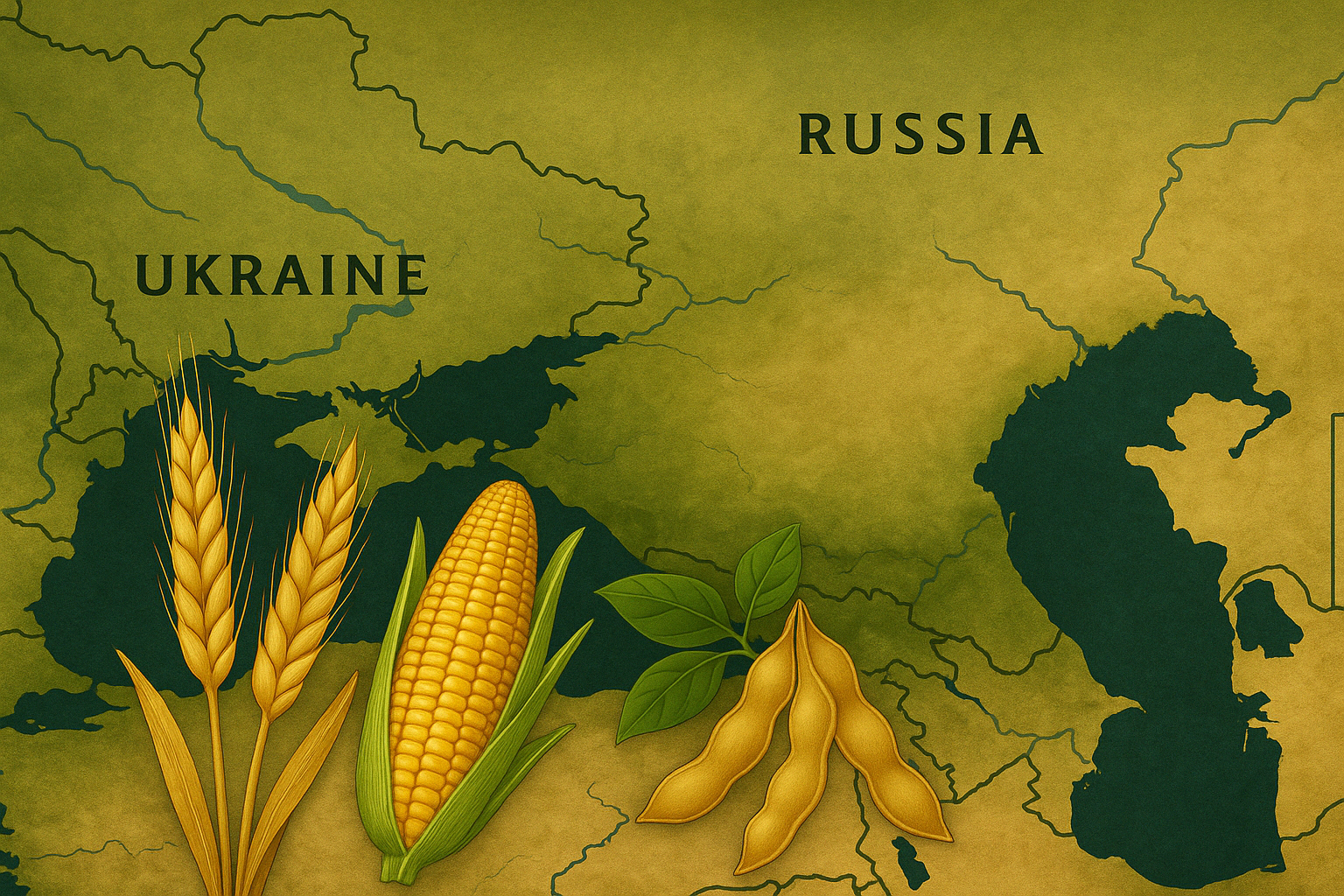
Russia and Ukraine are intensifying competition in wheat, Romania is preparing new measures to reduce farm costs, and expanding oilseed production in Southeast Europe is reshaping the balance of the Black Sea market.
The Black Sea agricultural market remains one of the main sources of competitive pressure on European prices. This week, attention centred on stronger Russian and Ukrainian wheat supply, the future access of Ukrainian agricultural products to the EU market and the growing importance of Southeast Europe in rapeseed and sunflower.
At the same time, policies affecting production costs could alter regional competitiveness. Romania is discussing a mechanism allowing farmers to purchase excise-free diesel directly at fuel stations from 2027 and is preparing around EUR 60 million in compensation for fertiliser costs.
Russia and Ukraine Increase Pressure on European Wheat
Larger Black Sea supply continues to limit the recovery in European wheat prices. Although French exports have become more active and the nearby Euronext contract posted a third consecutive gain, Russian and Ukrainian exports continue to provide strong competition on international markets.
December milling wheat on Euronext rose 0.1% to EUR 228.25/tonne after previously falling to EUR 223/tonne, its lowest level in three and a half months.
Russian wheat exports are estimated at around 3 million tonnes in October. As of 2 November, more than 120,000 tonnes of Russian wheat with 12.5% protein were being offered through Baltic ports at USD 258–261/tonne FOB. This was around USD 5/tonne below Western European wheat and USD 10 below Russian wheat offered on the Romanian market.
Russian traders are increasingly using Baltic ports, while Ukrainian wheat is also reaching international markets through Romania. The result is stronger competition both within the Black Sea basin and in traditional destination markets for European wheat.
Ukraine’s Future Access to the EU Becomes a Strategic Issue
Another important regional issue is the future trade regime for Ukrainian agricultural products after potential EU accession. Kyiv says it is prepared to accept temporary restrictions on some agricultural products but rejects the possibility of those measures becoming permanent trade barriers.
According to the source, the European Commission has proposed that certain sensitive Ukrainian agricultural products, particularly grain, could remain excluded from the EU market even after full membership. In return, the EU could support exports of these products to third-country markets, particularly the Middle East, Africa and Asia.
For the Black Sea region, the direction of these flows is strategically important. If larger volumes of Ukrainian grain are redirected towards third-country markets rather than the EU internal market, competition between Ukraine, Russia and other regional exporters could become even stronger in international destinations.
Romania Prepares Measures to Reduce Production Costs
Romania’s Agriculture Ministry is discussing a system under which farmers could purchase excise-free diesel directly from fuel stations from 2027. The current diesel price is given at around 11 lei/litre, of which the excise component is between 2.7 and 3 lei/litre.
At the same time, the government is preparing around EUR 60 million to compensate crop producers for fertiliser costs. EUR 29.8 million is being provided by the European Commission, with another EUR 30 million expected from the national budget.
Such measures may also affect regional competitiveness because fuel and fertiliser are major components of grain production costs. In a highly competitive Black Sea market, differences in input costs can translate directly into differences in export competitiveness.
Southeast Europe Moves Against the Broader EU Rapeseed Trend
EU rapeseed area for 2027/28 is expected to fall by 5% to 6.1 million hectares, largely because of drought and difficult planting conditions in France and other parts of Europe.
Southeast Europe is moving in the opposite direction. Bulgaria is a clear example: winter rapeseed area in Dobruja alone has reached 202,000 decares, while national rapeseed plantings are 18.3% above the previous year.
For 2026/27, EU rapeseed production is estimated at 19.9 million tonnes, slightly above the previous estimate of 19.8 million tonnes but still 3.4% below the previous season. February and May 2027 Euronext rapeseed futures are indicated around EUR 550/tonne, while Romanian rapeseed is quoted at EUR 520/tonne DAP Constanța.
Regional Sunflower Trade Is Being Reshaped
EU sunflower seed imports have risen sharply. From 1 July to 25 October, imports reached 240.48 thousand tonnes, an increase of 73.9% compared with the same period last season.
Argentina is now the largest supplier, shipping 101.1 thousand tonnes and accounting for 42.04% of EU imports. Serbia ranks second with 48.68 thousand tonnes and a 20.24% share, while Moldova has fallen to third place with 48.25 thousand tonnes and a 20.06% share.
Ukraine has also increased sunflower exports to the EU by 6.2 times, reaching 11.76 thousand tonnes from 1.89 thousand tonnes a year earlier. Its share of EU imports has increased to 4.89%.
This combination of larger regional supply and stronger external imports is increasing competitive pressure across the European oilseed market.
Softer Fertiliser Markets Could Ease Cost Pressure
The global mineral fertiliser market is showing the first signs of stabilisation following the previous period of price increases. Weak trading activity, high inventories and rising supply in several segments are creating the potential for lower prices.
Higher Chinese urea exports are adding pressure to nitrogen fertiliser prices. DAP prices are gradually declining because of weak trade and sufficient inventories, while MAP is holding its value more effectively. In potash, large inventories and moderate demand are also increasing the risk of lower prices.
For Black Sea producers, lower fertiliser prices could offset part of the pressure created by fuel, logistics and weak pricing in some grain markets.
Competition Remains the Defining Black Sea Theme
The overall regional picture remains highly competitive. Russia and Ukraine continue to pressure international wheat markets, Romania is seeking to reduce production costs for its farmers, and Bulgaria and other parts of Southeast Europe are increasing their focus on rapeseed.
At the same time, sunflower trade is changing rapidly as EU imports rise, while the future treatment of Ukrainian agricultural products after potential EU accession could have long-term implications for trade flows across the entire Black Sea basin.