



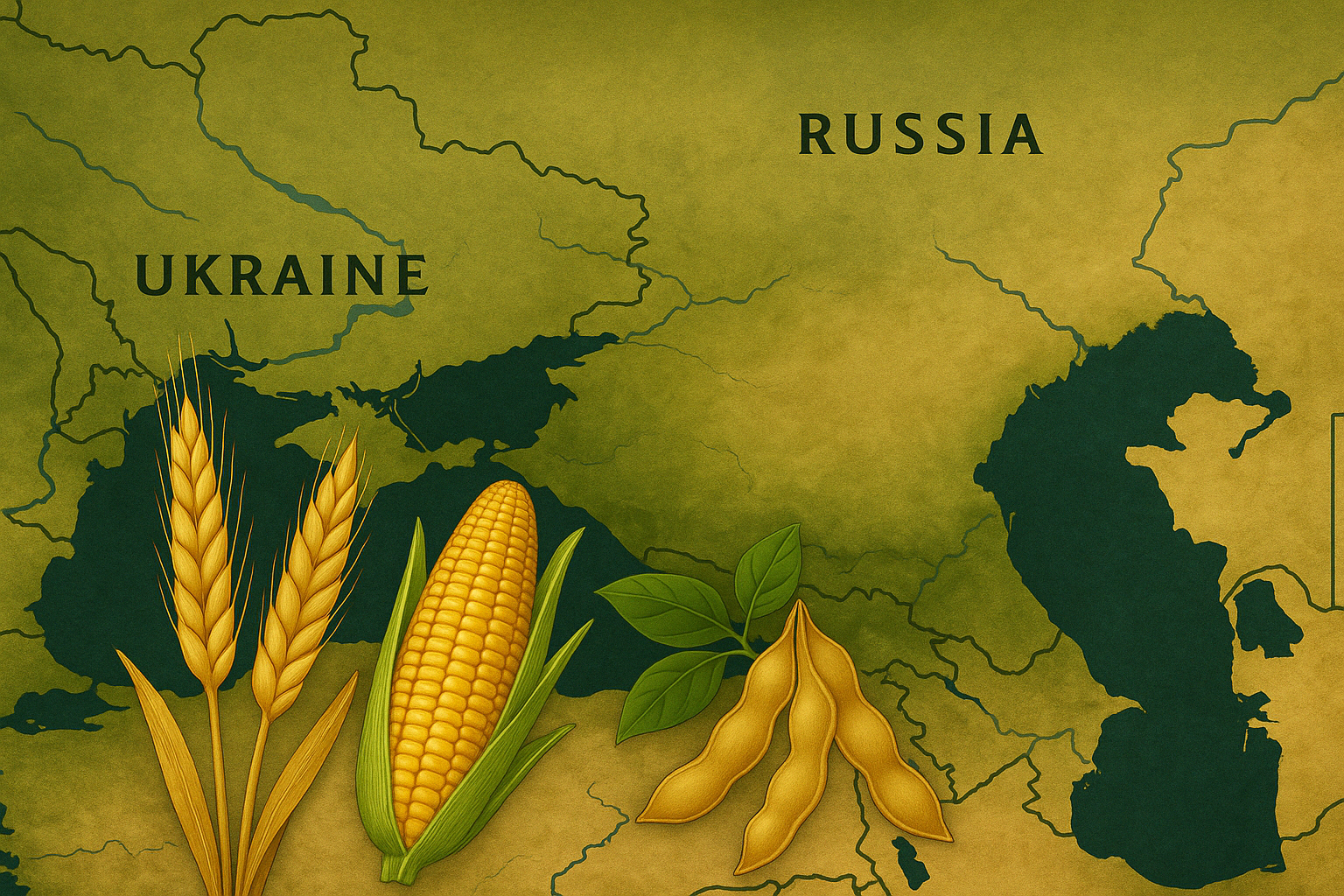
Russia is testing alternative export channels through Abkhazia, Ukraine is sharply increasing sunflower product exports, and logistics risk remains one of the defining forces behind Black Sea grain competitiveness.
The Black Sea grain market continues to operate at the intersection of geopolitics, logistics, production costs and physical demand. The region remains a critical supplier of wheat, corn and oilseed products to Europe and Turkey, but shipping uncertainty, higher transport costs and the need for alternative trade routes are increasingly shaping how cargoes are priced and executed.
Black Sea Risk Remains Embedded in Trade
Persistent disruption to Black Sea export flows remains one of the key factors limiting global wheat trade. Weaker Russian exports are directly linked to logistical problems in the region, while global wheat consumption remains above production and stocks are gradually declining.
This means that even when international futures weaken, freight, insurance and route reliability continue to carry their own regional premium.
Russia Looks to Abkhazia for an Alternative Export Route
Russian grain exporters are considering the port of Ochamchire in Abkhazia as a new route for wheat and other agricultural products destined for Turkey. Cargoes would move in containers rather than bulk, with shipments expected to begin after a quality-control facility is opened at the end of November.
The route is unlikely to replace traditional Black Sea export capacity. A standard 20-foot container can carry around 23 tonnes of grain, while large bulk vessels can transport up to 100,000 tonnes per voyage.
The new corridor may therefore ease pressure at the margin, but its limited scale and higher transport costs constrain its broader market impact.
Russia Continues to Diversify Logistics
Black Sea restrictions are also pushing more Russian cargo toward Baltic ports, Murmansk and rail corridors to the Far East. Containerised exports have become relatively more attractive because of rail subsidies and lower domestic wheat prices, but the method remains more expensive and less efficient than conventional bulk shipping.
The development highlights how strongly regional grain competitiveness now depends on access to reliable transport infrastructure.
Ukraine Accelerates Sunflower Exports
Ukraine has sharply increased exports of sunflower seed and sunflower products.
By October 22, sunflower seed exports reached 25,000 tonnes, compared with 6,000 tonnes during the same period of September. Turkey was the largest buyer at 9,300 tonnes, followed by Italy at 6,500 tonnes and Austria at 3,100 tonnes.
Sunflower oil exports reached 177,600 tonnes, up from 86,600 tonnes over the comparable September period. Turkey received 32,400 tonnes, Romania 24,400 tonnes and the Netherlands 22,600 tonnes.
Sunflower meal exports rose 15.1% to 217,700 tonnes, led by Poland, China and Romania.
Turkey Strengthens Its Role as a Regional Buyer
Turkey is central to several of the week’s major physical trade developments. It is the leading destination for Ukrainian sunflower seed and sunflower oil, while Russia’s proposed Abkhazia route is also designed to move grain toward the Turkish port of Gebze.
This reinforces Turkey’s strategic role in regional grain and oilseed flows, particularly when longer-distance logistics become more expensive or uncertain.
Sunflower Oil Prices Support Processing Economics
European sunflower oil prices have risen sharply, with the nearby delivery premium through December reaching $50. At the same time, Ukrainian sunflower seed prices have declined by 5.3%.
The widening relationship between raw seed and oil prices creates an incentive for processing and exports of higher-value sunflower products.
Ukrainian Planting Decisions Point Toward Oilseeds
Ukraine had planted 5.35 million hectares of winter crops by October 27, equivalent to 84.7% of the forecast area. Wheat and triticale account for 3.75 million hectares, while winter barley stands at 390,000 hectares.
Winter rapeseed, however, has already exceeded the planned area, reaching 1.13 million hectares, 2.7% above the initial forecast.
High production costs, expensive export logistics, accumulated inventories and limited liquidity are encouraging Ukrainian farmers to take a more cautious approach toward grain and place greater emphasis on oilseeds.
Bulgaria Remains an Important Black Sea Export Corridor
Bulgarian Black Sea exports continue, but traders have become more cautious following drone strikes on grain vessels in the region. Some orders are being divided into smaller cargoes to reduce exposure to individual shipment risk.
Varna port indications of €220–230/tonne for wheat, €230/tonne for corn and €510–520/tonne for sunflower seed show that physical demand remains active despite the more cautious logistics environment.
Europe’s Corn Deficit Supports Regional Relevance
EU corn production is expected to be the weakest since the 1994/95 season.
Large global supply, particularly from the United States, creates international price pressure, but the weak European crop preserves the need for imports. This keeps Black Sea supply corridors strategically relevant to European consumers.
El Niño Adds Another Layer of Risk
The probability of a strong to very strong El Niño through the first quarter of 2027 is estimated at more than 83%. Combined with higher energy and transport costs, this keeps the balance of global agricultural risks tilted toward greater volatility.
For the Black Sea, this is an additional external risk on top of an already complex logistical environment.
Logistics Is Becoming the Core Competitive Factor
The central message for the Black Sea region is increasingly clear: nominal grain prices alone no longer determine competitiveness.
Russia is searching for alternative routes, Ukraine is shifting part of its economic focus toward oilseeds and rapidly expanding sunflower-product exports, Bulgaria continues to ship but with tighter risk management, and Turkey is strengthening its position as a major regional buyer.
The Black Sea remains one of the world’s most strategically important agricultural trade regions, but its ability to compete increasingly depends on whether grain and oilseeds can be moved securely, efficiently and at an acceptable cost.