




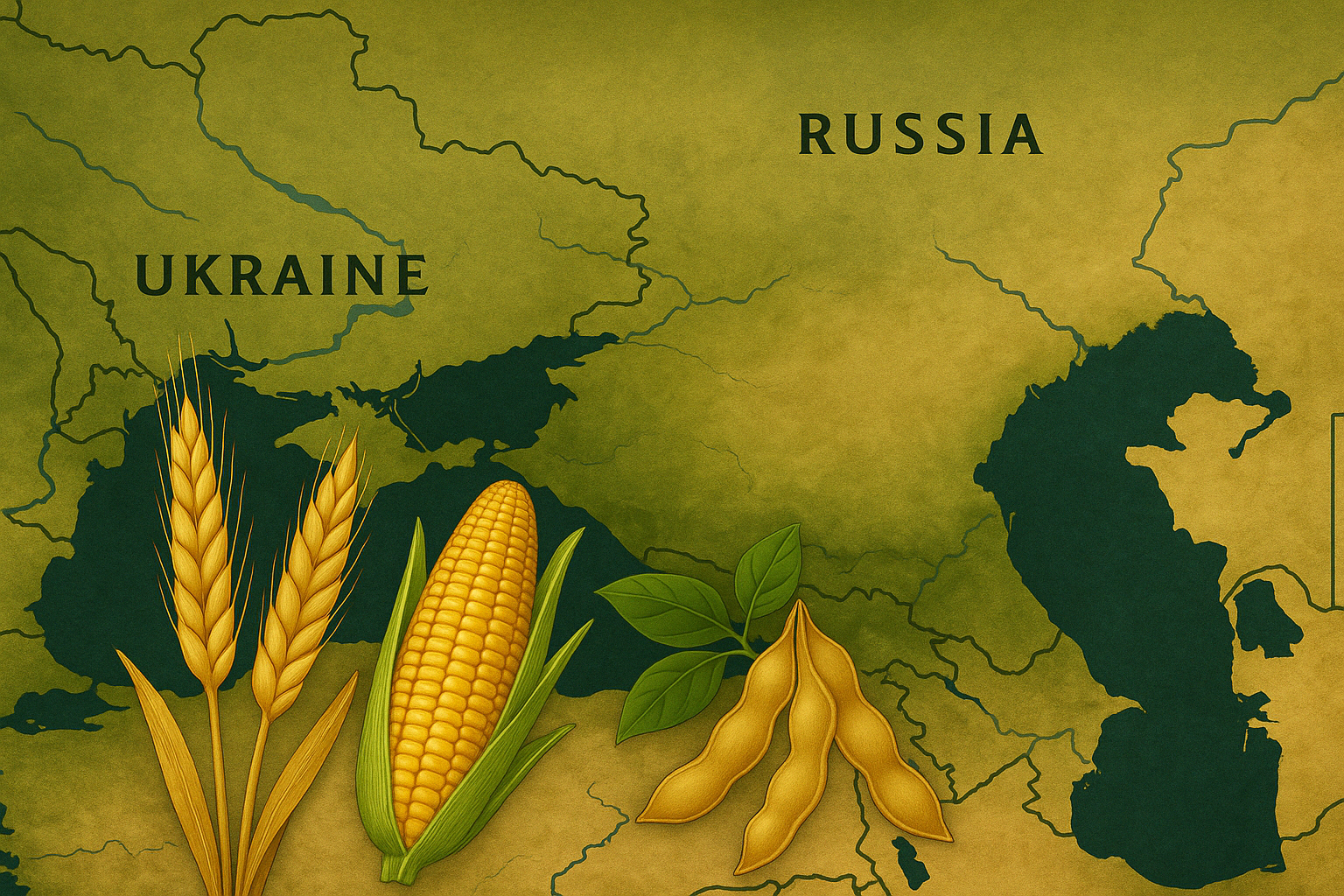
Ukraine is heading toward a strong corn harvest while Turkey remains heavily dependent on sunflower imports and Romania faces an unusual combination of firm corn prices and severe storage pressure.
The Black Sea grain and oilseed market is entering the autumn with sharply different supply signals across the region. Ukraine is still expected to produce a sizeable corn and sunflower crop despite difficult summer weather, Turkey’s improved sunflower harvest will not eliminate its import requirement, while Romania is dealing with strong corn prices alongside substantial logistical pressure from limited storage capacity.
Ukraine’s corn outlook remains surprisingly strong
Despite prolonged drought in western Ukraine and uneven summer conditions across the country, the latest outlook points to corn yields slightly above the five-year average. JRC MARS projects an average grain corn yield of 7.40 t/ha, putting national production at around 35.1 MMT.
Sunflower prospects are also relatively resilient. Average yield is forecast at 2.29 t/ha, slightly above the five-year average, with production estimated at 14 MMT. Soybeans are the clear exception: output is projected at only 3.68 MMT, or 23% below the five-year average, reflecting both lower yields and reduced planted area.
This creates a mixed regional supply picture. Ukraine could remain a significant source of corn and sunflower, while the much weaker soybean outlook tightens the country’s oilseed balance.
Turkey’s sunflower crop improves, but import demand stays high
Turkey’s sunflower production is projected at 1.8 MMT in 2026/27, around 550,000 tonnes above the previous season, supported by better weather and a modest expansion in planted area to approximately 770,000 hectares. Around 60% of the crop had already been harvested by mid-September.
The larger crop, however, does not remove Turkey’s import requirement. Domestic sunflower consumption is estimated at 3.4 MMT, while sunflower seed imports are forecast at approximately 1.8 MMT. Around 400,000 tonnes of seed imports for September–November have already been contracted.
Turkey therefore remains an important source of regional demand. Even with better domestic production, its processing industry will continue to rely heavily on imported sunflower seed, keeping Black Sea oilseed flows commercially important.
Romanian corn trades above wheat as storage becomes a bottleneck
Romania is seeing an unusual price relationship at the start of its corn harvest, with corn again trading above wheat.
The more immediate challenge, however, is logistics. Romania expects around 31.4 MMT of grain, while licensed storage capacity is estimated at only 16.5 MMT. Even after accounting for volumes already moved into export channels, the source points to a substantial remaining storage gap.
Corn yields are described as good in many areas, reaching as much as 8 t/ha without irrigation, despite a smaller planted area. The combination of relatively firm prices and good yields is supportive for producers, but drying, energy and storage costs continue to absorb part of that advantage.
Regional wheat and corn markets remain under pressure
The broader grain market remains soft despite some tighter regional supply signals. Wheat futures ended Wednesday lower, while corn also weakened. At the same time, Coceral reduced its 2026 corn production forecast for the EU and UK from 52.7 MMT to 48.6 MMT, with the French estimate cut particularly sharply to 7.6 MMT.
For the Black Sea region, the key theme is therefore not a uniform shortage or surplus, but increasingly uneven supply and logistics. Ukraine still has meaningful corn and sunflower potential, Turkey continues to generate substantial oilseed import demand, and Romania’s strong crop is colliding with limited storage capacity. Together, these differences are likely to keep regional trade flows active even as international grain prices remain under pressure.