




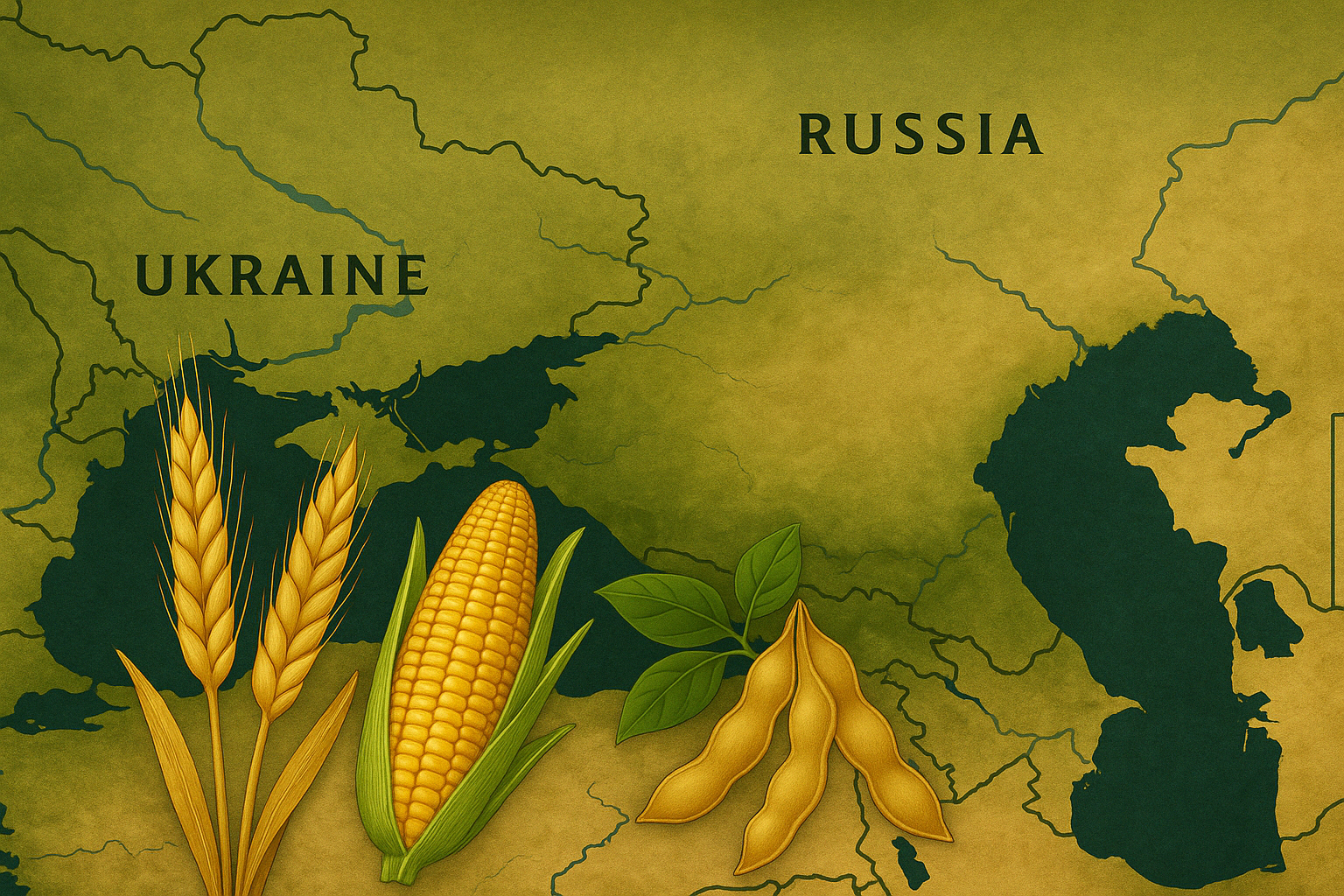
Vessel incidents, limited overland capacity and rising logistics costs are tightening export options for Ukraine and Russia and increasing pressure across the wider Black Sea grain market.
Black Sea uncertainty is increasingly shifting from a security issue into a trade constraint. Vessel incidents near Bulgaria and Romania could increase insurance and freight costs, while large volumes of wheat, corn and barley remain heavily dependent on maritime transport with few realistic alternatives.
Ukraine Faces a Growing Export Bottleneck
Ukraine is seeking additional European support for grain exports and around €1.1 billion to cover higher transport costs. Less than half of Ukrainian exports can currently move through European rail, road and river routes, and as much as 35 MMT could remain blocked inside the country if the disruption persists. Poland and Romania, however, have indicated that they are not prepared to provide significantly more capacity, prioritising their own agricultural sectors.
Black Sea Restrictions Weigh on Global Grain Trade
The United Nations Food and Agriculture Organization expects global grain trade in 2026/27 to decline 3.5% to 505.8 MMT, with restrictions on Black Sea shipping routes and insufficient alternative transport capacity among the main reasons. Wheat shipments from Russia and Ukraine are expected to decline, while Ukrainian corn exports are also constrained by logistics.
Ukraine’s sunflower market is facing additional pressure. Production is forecast at 13–13.5 MMT, up from 10.5 MMT last season, while rapid harvesting is increasing domestic supply at a time when some processors will not operate. Domestic purchasing prices have fallen to UAH 17,000–19,000/ton, with higher export logistics costs adding further pressure.